The HDPE Socket Fusion Reducer Tee for Fuel Gas is a PE100 tee fitting with socket fusion connections that provides branch size transitions in gas distribution and industrial fuel gas systems.
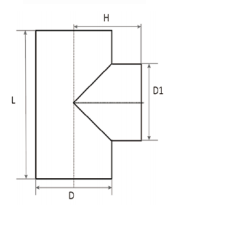
|
Reducing Tee
|
|
|
|
|
|
Size
|
D(mm)
|
L(mm)
|
D1(mm)
|
H(mm)
|
|
25 x 20
|
33
|
58
|
27
|
31
|
|
32 x 20
|
42
|
63
|
27
|
33
|
|
32 x 25
|
42
|
69
|
33
|
36
|
|
40 x 20
|
50
|
59
|
26
|
36
|
|
40 x 25
|
50
|
65
|
30
|
38
|
|
40 x 32
|
50
|
70
|
41
|
40
|
|
50 x 20
|
61
|
68
|
26
|
42
|
|
50 x 25
|
61
|
77
|
34
|
45
|
|
50 x 32
|
61
|
83
|
42
|
45
|
|
50 x 40
|
61
|
91
|
50
|
46
|
|
63 x 20
|
77
|
70
|
26
|
48
|
|
63 x 25
|
77
|
76
|
31
|
50
|
|
63 x 32
|
77
|
82
|
41
|
52
|
|
63 x 40
|
77
|
91
|
50
|
53
|
|
63 x 50
|
77
|
100
|
61
|
58
|
|
75 x 20
|
87
|
80
|
29
|
56
|
|
75 x 25
|
87
|
87
|
34
|
58
|
|
75 x 32
|
87
|
91
|
40
|
57
|
|
75 x 40
|
87
|
100
|
50
|
62
|
|
75 x 50
|
87
|
112
|
61
|
65
|
|
75 x 63
|
87
|
130
|
76
|
67
|
|
90 x 40
|
105
|
132
|
70
|
70
|
|
90 x 50
|
107
|
120
|
61
|
70
|
|
90 x 63
|
107
|
147
|
76
|
80
|
|
90 x 75
|
107
|
151
|
90
|
81
|
|
110 x 40
|
132
|
136
|
48
|
77
|
|
110 x 50
|
132
|
137
|
60
|
88
|
|
110 x 63
|
132
|
159
|
76
|
100
|
|
110 x 75
|
132
|
161
|
90
|
101
|
|
110 x 90
|
132
|
177
|
107
|
91
|
Key Features of HDPE Socket Fusion Reducer Tee for Fuel Gas
- PE100 material ensures gas transmission safety.
- Socket fusion creates permanent leak-free joints.
- Reducer design accommodates pipe diameter transitions.
- The fitting resists chemical corrosion and UV exposure.
- Minimum 50-year service life design.
Manufacturing Process of HDPE Socket Fusion Reducer Tee for Fuel Gas
Each is produced by computer-controlled injection molding.
Critical Process Parameters of HDPE Socket Fusion Reducer Tee for Fuel Gas
- Barrel temperature control: 220–240°C
- Mold cooling rate: 3–5°C/minute
- Holding pressure: 70–85 MPa
- Melt flow rate control: 0.15–0.35 g/10min
Raw Material Characteristics of HDPE Socket Fusion Reducer Tee for Fuel Gas
- Density: 0.948–0.965 g/cm³
- Long-term hydrostatic strength: 10.0 MPa (20°C, 50 years)
- Elastic modulus: 800–1100 MPa
- Notched impact strength: ≥8 kJ/m² (23°C)
- Slow crack growth resistance: ≥500 hours
Typical Applications of HDPE Socket Fusion Reducer Tee for Fuel Gas
- The fitting provides reducer connections from main gas lines to service branches.
- serves header integration for CNG dispenser piping.
- is used in branching systems for road-crossing gas pipelines.
- is installed in fuel gas control circuits in industrial flare systems.
Application Scenarios of HDPE Socket Fusion Reducer Tee for Fuel Gas
- Reducing branch connections in gas distribution networks — is the standard tee for these transitions.