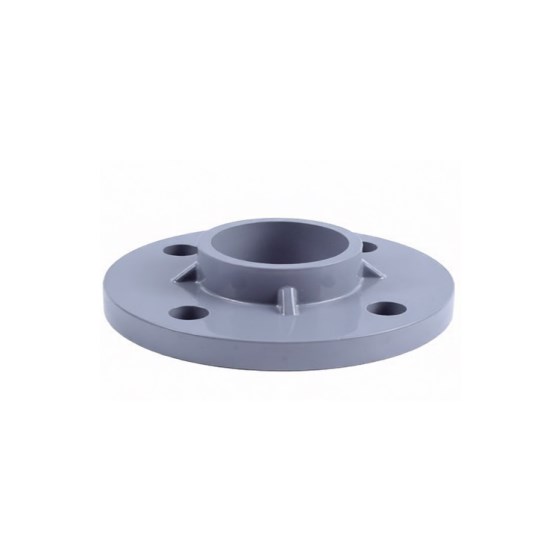
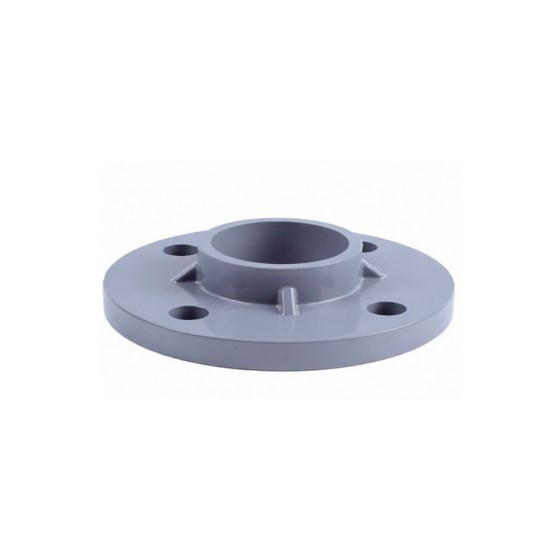
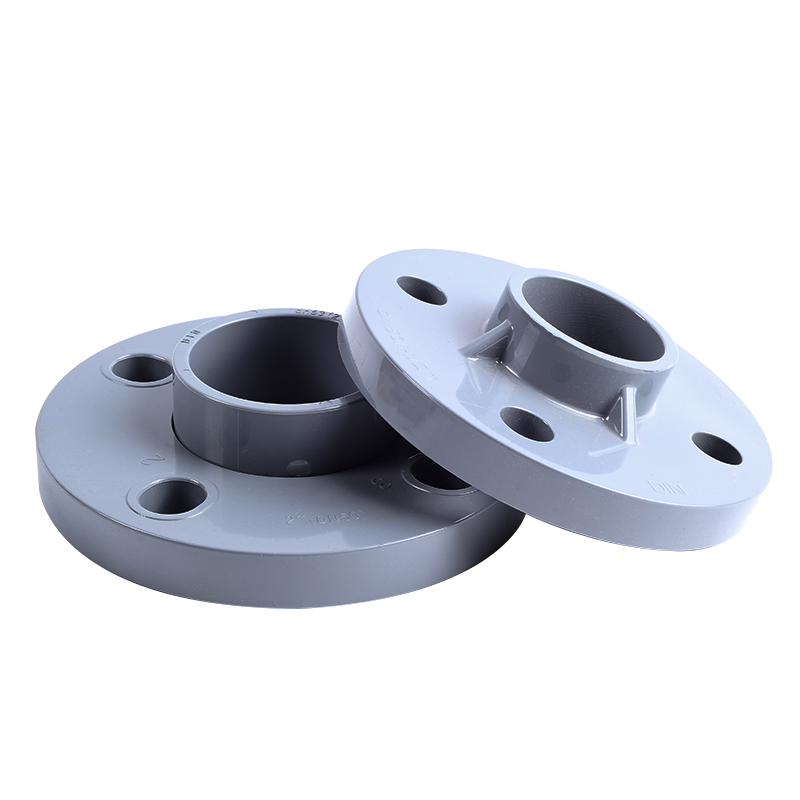
The CPVC Solvent Cement Flange is a one-piece flange in chlorinated polyvinyl chloride (CPVC) with a solvent-cement hub and a precision bolt-hole circle. The CPVC Solvent Cement Flange bonds permanently to the pipe with CPVC solvent cement and bolts through a gasket to standard mating flanges in potable water and industrial corrosive systems. Rated to 90°C, this CPVC solvent cement flange resists most acids, alkalis and oxidizing media and is the usual transition to metal pumps, valves and vessels.
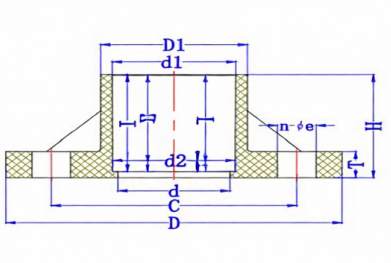
|
Specification
|
|
|
|
|
|
|
|
|
|
|
|
|
D
|
D1
|
C
|
d
|
d1
|
d2
|
H
|
T
|
I
|
n-φe
|
|
20
|
95
|
32
|
65
|
15
|
20.30
|
20.00
|
33
|
14
|
30.0
|
4-14
|
|
25
|
105
|
35
|
75
|
20
|
25.30
|
25.00
|
40
|
15
|
35.0
|
4-14
|
|
32
|
115
|
43
|
85
|
25
|
32.30
|
32.00
|
45
|
16
|
40.0
|
4-14
|
|
40
|
140
|
52
|
100
|
32
|
40.30
|
40.00
|
49
|
18
|
44.0
|
4-18
|
|
50
|
150
|
59
|
110
|
43
|
50.30
|
50.00
|
59
|
18
|
31.0
|
4-18
|
|
63
|
165
|
76
|
125
|
55
|
63.30
|
63.00
|
44
|
20
|
38.0
|
4-18
|
|
75
|
185
|
89
|
145
|
65
|
75.30
|
75.00
|
70
|
20
|
43.5
|
4-18
|
|
90
|
200
|
106
|
160
|
80
|
90.30
|
90.00
|
73
|
20
|
51.0
|
8-18
|
|
110
|
220
|
132
|
180
|
100
|
110.40
|
110.00
|
70
|
22
|
61.0
|
8-18
|
|
140
|
250
|
162
|
210
|
125
|
140.60
|
140.00
|
88
|
25
|
76.0
|
8-18
|
|
160
|
285
|
185
|
240
|
154
|
160.70
|
160.00
|
116
|
25
|
86.0
|
8-22
|
|
225
|
340
|
257
|
295
|
200
|
225.80
|
225.0
|
134
|
25
|
118.5
|
8-22
|
Key Features of CPVC Solvent Cement Flange
- One-piece CPVC flange with a solvent-cement hub and precision bolt-hole circle.
- Hub bonds to pipe with CPVC solvent cement into a permanent glued joint.
- Bolted, gasket-sealed face gives a detachable connection to standard mating flanges.
- Long-term service up to 90°C; resists acids, alkalis, salts and oxidizing media.
- Standard transition between CPVC pipe and metal pumps, valves and vessels.
Manufacturing Process of CPVC Solvent Cement Flange
Each CPVC Solvent Cement Flange is injection molded as one CPVC piece, then the hub socket is reamed and the bolt circle and flange-face flatness are checked before solvent-cement bonding. Solvent cement is applied to the cleaned socket and pipe spigot, which are then held until the glued joint cures into a single continuous CPVC structure.
Critical Process Parameters of CPVC Solvent Cement Flange
- CPVC compound is processed inside its narrow melt-temperature window to avoid degradation.
- Socket inner diameter and spigot interference are controlled to the CPVC solvent-cement fit tolerance.
- Cement coating is even and full-length; set and cure times follow the cement manufacturer schedule before pressure testing.
- Wall-thickness uniformity and roundness are checked to safeguard pressure rating.
- 100% visual and dimensional inspection, with batch pressure and hydrostatic testing.
Raw Material Characteristics of CPVC Solvent Cement Flange
- Body in CPVC (chlorinated polyvinyl chloride), joined with CPVC solvent cement.
- Long-term service temperature up to 90°C, well above conventional UPVC.
- Excellent resistance to acids, alkalis, salts and many oxidizing media.
- Flame retardant and self-extinguishing with a high limiting oxygen index (LOI).
- Smooth non-scaling inner surface keeps flow efficient and biofilm low.
Typical Applications of CPVC Solvent Cement Flange
- Flanged connections to pumps and valves in potable water CPVC systems.
- Equipment flanges in water treatment, RO and high-purity water plants.
- Bolted transitions to metal equipment on acid and alkali lines.
- Glued flanges for removable spools in chemical process piping.
- Corrosive flanged joints in desalination and seawater systems.
Application Scenarios of CPVC Solvent Cement Flange
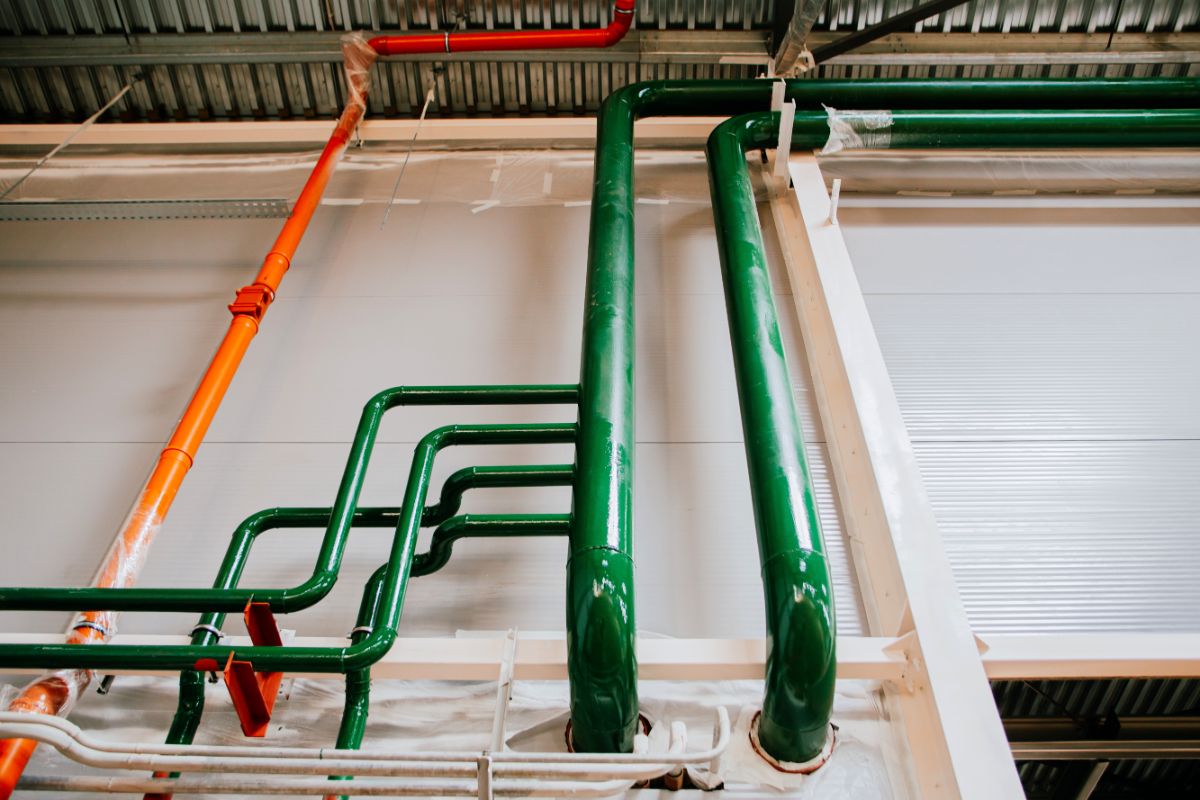
The CPVC Solvent Cement Flange is the standard glued-hub, bolted-face transition between CPVC pipe and flanged metal equipment in water supply and industrial corrosive systems.